Swimming pools are a great place to relax and have fun. Unfortunately, they can also be dangerous. Each year, thousands of people drown in swimming pools or are otherwise treated for nonfatal pool injuries.
If you or your child were hurt at a swimming pool, you might be able to pursue a lawsuit against the pool owner or operator. California property owners have an obligation to maintain their premises in a reasonably safe condition, including their pools. If they fail to do so, they could be liable for your medical bills, lost wages, emotional distress, pain and suffering, and other losses.
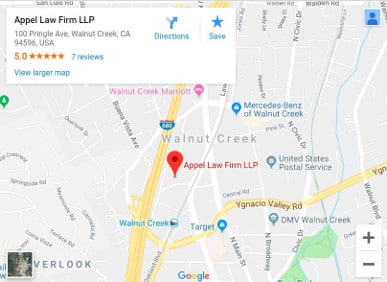
At the Appel Law Firm, we are fierce advocates for injury victims in and around Walnut Creek, California. We handle claims related to swimming pool injuries and wrongful death drownings. Contact our law offices today to schedule a free consultation with a Walnut Creek personal injury attorney.
Common Swimming Pool Injuries
There are many different ways to get hurt in and around a swimming pool. It isn’t uncommon for a swimmer to suffer:
- Cuts and scrapes from slipping and falling on a wet pool deck
- Broken bones from falling
- Bruises, cuts, and soft tissue injuries from slipping on a diving board
Many people are severely or fatally injured while swimming. This can include drownings and near-drownings that result in permanent injuries (such as a traumatic brain injury due to lack of oxygen). Others may suffer a broken spine or neck from diving into the shallow part of the pool.
Some swimming pool injuries are nothing more than a matter of bad luck. However, other swimming pool injuries may be caused by things like hazardous conditions around the pool, a lack of supervision, or allowing access to the pool. In these situations, you may be able to pursue a claim against the pool owner or operator for your losses.
Who Can Be Held Responsible for a Swimming Pool Accident in California?
After a swimming pool accident, you may be able to bring a personal injury claim for your losses. Depending on the facts of your case, there may be several parties who could be held liable. This may include:
- Owner of a Private Swimming Pool: Many swimming pool accidents, including drownings, happen in privately-owned swimming pools. A homeowner with a pool in their backyard could be responsible for a swimming pool accident in a variety of circumstances, such as:
- Failing to properly secure the pool in accordance with local regulations (such as installing a fence with a locking gate)
- Leaving a gate to the pool open
- Leaving a child unattended in the pool
- Failing to repair a dangerous condition in or around the pool
In cases involving private pools, the owner’s homeowners’ insurance policy should cover any losses.
- Public Swimming Pool Operators: Local governments may operate swimming pools that are open to the public. If an accident occurs at a public pool, the local government agency could be held liable for failing to warn patrons of a dangerous condition, negligently hiring untrained lifeguards, or because the lifeguards failed to properly supervise swimmers. Importantly, there are different rules and a shorter timeline for filing a claim against a government agency in California.
- Water Parks and Hotels: Swimming pool accidents may also happen at water parks and hotels. In this situation, the company that owns and operates the pool could be liable for failure to warn patrons of a potential hazard if part of the pool area was unreasonably risky, or if lifeguards’ negligence led to the accident.
- Apartment Complexes: If an apartment or condominium complex has a swimming pool, then the property owner could be held liable for a swimming pool accident. This could happen in situations such as the complex ignoring complaints about a dangerous condition, failing to provide safety equipment, or not taking reasonable steps to secure the pool.
Regardless of whether the pool is publicly or privately owned, if a person is hurt in a swimming pool accident, the pool owner could be held liable. In California, property owners are required to keep their property in a reasonably safe condition. This includes swimming pools.
If a property owner fails to keep their pool in a reasonably safe condition or warn others about obvious hazards, they could be held liable for any injuries that a person suffers in or around the pool. A property owner could be responsible for a swimming pool injury or drowning based on the facts of the case, such as:
- If it was foreseeable that children would try to get into the pool
- If there was a fence around the pool
- Whether there was a lock on the gate to the pool (and if the gate was locked)
- If there is a history of people gaining access to the pool in the past
California no longer has an “attractive nuisance” doctrine. This is a legal theory that states that if a property owner has a particularly attractive feature on their property, like a pool, they are responsible for injuries caused to children who trespassed on their property. Instead, California property owners have a general duty to maintain their property in a reasonably safe condition.
If you are unsure about whether or not a pool owner can be held liable for your injuries, we can help. During a free initial consultation, our Walnut Creek premises liability lawyers will listen to your story. We will then offer you advice about your legal rights and options for pursuing a claim.
What Is Negligent Supervision?
Many swimming pool accident cases focus on the condition of the property and whether there were dangerous conditions. In other cases, a swimming pool accident case is based on a concept known as negligent supervision.
A negligent supervision claim can be brought against a swimming pool owner or operator if an accident was caused by a lack of supervision. These types of claims are more common for accidents that happen at public pools or parks that are supposed to have lifeguards on duty. This type of lawsuit may allege that:
- A lifeguard failed to do their job
- There was no sign that lifeguards were off duty and to swim at your own risk
It may also be possible to bring a negligent supervision claim against a private pool owner. For example, if you drop your child off at a friend’s house for a pool party and that adult leaves the kids alone in the pool to go inside and take a call, they could potentially be liable if your child is hurt while in the pool unsupervised. We can help you assess your rights and decide how to proceed if this happens to you or your family.
Compensation in a Pool Accident Case
If you were hurt in a California swimming pool accident, you may be entitled to money for your losses. This compensation is known as damages.
In most cases, you can recover compensatory damages to compensate you for your losses. There are two types of compensatory damages:
- Economic damages pay for your direct financial losses. This may include money for your medical bills, future medical treatment, lost income, and reduced earning capacity. If you suffered severe injuries and needed to renovate your house to accommodate your disability, economic damages could also include money for those losses.
- Non-economic damages pay for your indirect losses, such as pain and suffering, reduced quality of life, emotional distress, scarring, and disfigurement.
In rare cases, you may be able to recover punitive damages, which are meant to punish a wrongdoer. Punitive damages are only available in cases where the at-fault party acted intentionally or recklessly (as opposed to carelessly, which is the more typical situation).
If a family member died in a pool accident, you can file a wrongful death lawsuit. Damages in a wrongful death claim may include money for funeral expenses, loss of consortium, loss of companionship, loss of financial security, and the victim’s lost income. Our Walnut Creek personal injury lawyers can help you understand what compensation may be available to you if your loved one died in a swimming pool accident.
Reach Out to Talk to a Walnut Creek Premises Liability Lawyer
When you get hurt at a swimming pool, it can quickly turn a day of fun into a day of agony. In some situations, you may be able to pursue a legal claim against the pool owner or operator. Our law firm can help you understand your options and will work with you to get the best possible outcome.
The Appel Law Firm offers high-quality legal representation for accident victims throughout the Walnut Creek region. We handle all cases on a contingency fee basis, which means that you’ll never pay a fee unless we recover money for you. To learn more or to schedule an appointment with a Walnut Creek personal injury lawyer, give us a call at (925) 938-2000 or fill out our online contact form.